

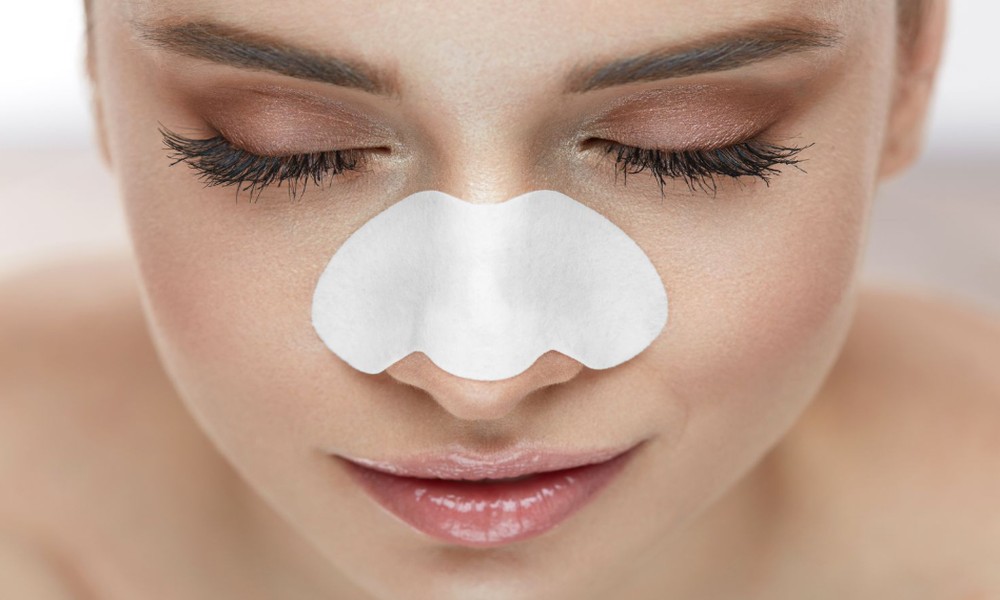
Ask most snorers what they’ve tried and the list comes out fast – chin straps, mouth sprays, special pillows, wedges under the mattress. None of it stuck. What almost never makes that list, despite working for a lot of people, is a plain nasal strip. Breathing strips for snoring address the problem from the outside, physically widening the nasal passage before the throat ever has to compensate. That’s where a surprising amount of snoring actually begins.
The Nose Was Doing the Job First
Most people picture snoring as a throat issue. Sometimes that’s true. But often the throat is only the site of the problem, not the cause. When nasal airflow gets restricted – by inflammation, a structural quirk, or a bad night of congestion – the body defaults to mouth breathing. The throat suddenly handles volume it wasn’t meant to carry alone. Soft tissue rattles. That rattle is snoring. Fix the nose first and the throat often quiets down on its own.
Why Strips Peel Off Early
A strip comes off by midnight and people blame the product. Usually wrong. Nasal strips rely entirely on adhesion, and adhesion needs dry, bare skin. Most people apply them right after washing their face – moisturiser still present, skin still slightly damp. The strip holds for an hour, then loses contact. Dry the nose before applying. Wait. Press firmly along the edges. Half the failed strip experiences come down to this one step being skipped.
Congestion Changes Everything
Seasonal snorers are the clearest test case. Fine all year, then impossible to sleep next to during winter or spring. That pattern almost always means inflammation is narrowing the passage rather than something structural. For those people, breathing strips for snoring work fast – sometimes noticeably on the first night. Swollen mucosa or not, the strip widens the opening mechanically. Less resistance, less turbulence, less noise. Chronic narrowing responds the same way, just every night instead of seasonally.
Lighter Sleep Is the Hidden Problem
Snorers report sleeping fine. Technically they’re not wrong – they stayed unconscious. But restricted breathing keeps getting registered by the brain, which keeps nudging the body toward lighter sleep to protect the airway. Deep, restorative sleep shrinks. The hours stay the same but the quality drops. Foggy mornings, short fuse by midday, afternoon slumps – these trace back to sleep that looked like enough and wasn’t. Even a partial airflow improvement can shift the proportion of genuinely restorative sleep upward.
What Strips Can’t Fix
Nasal breathing strips work on one specific thing: restriction at the nose. Full stop. They do nothing for tongue position, jaw alignment, or the upper airway collapse behind obstructive sleep apnoea. Someone waking gasping, startling awake repeatedly, or waking with headaches isn’t dealing with a nasal issue. A strip won’t touch it. Reaching for one in that situation just delays the real conversation – which is with a GP or sleep specialist, not a pharmacy shelf.
The Partner Pays the Highest Price
Sleep studies flag something most people haven’t considered: the bed partner’s sleep is often worse than the snorer’s. The snorer habituates. The partner doesn’t get that option. Night after night of broken sleep, elbowing someone awake, eventually retreating to the sofa. The resentment that builds – quiet, never quite named – is real. A strip that drops the volume enough for a partner to sleep through the night doesn’t just fix a noise problem. It fixes something in the relationship.
Width and Lift Strength Aren’t the Same
Not all strips are built the same and it matters more than people assume. Lifting force varies. Span width varies. Some barely cover the bridge and miss the nasal valve – the narrowest internal point – entirely. A strip that does not span past that pinch point is decorative. Wider strips or ones rated for stronger lift cover the problem better. Trying one brand, finding it useless and writing off the category is one of the more common reasons people avoid something that would help.
Conclusion
Breathing strips for snoring aren’t complicated and they’re not trying to be. They open one thing, in one place, and for the people whose snoring starts there, the effect is immediate and obvious. Misapplication, wrong skin prep, wrong strip width – those are the reasons they fail, not the mechanism itself. Applied properly, they solve a problem that has been ruining sleep on both sides of the bed. That’s enough.
