

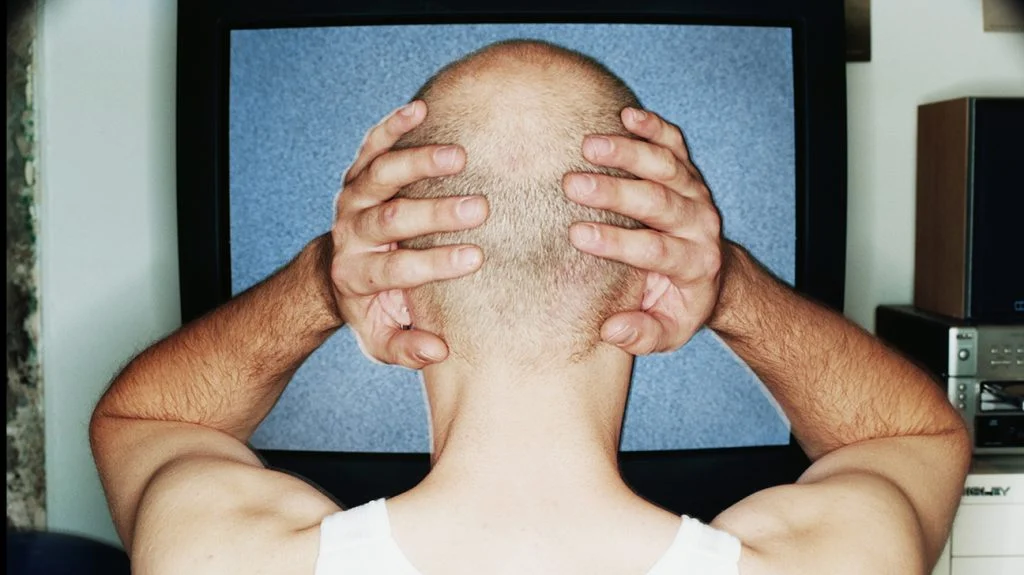
A “headache back of the head“ is frequently a “tension headache” caused by poor “tech-neck” posture or stress. However, if the pain feels like a sharp, electric shock, it might be occipital neuralgia. Physical therapy and ergonomic adjustments to your workspace are often the first—and most effective—lines of defense.
That said, the location of a headache is one of the best clues about its cause. Pain at the base of the skull is different from pain at the very top of the back of the head – and different again from pain that radiates up from the neck. Knowing where exactly it hurts helps narrow things down.
Pinpointing the Location
| Location | Most Likely Cause |
| Base of skull / where neck meets head | Occipital neuralgia, tension headache, hypertension |
| Back of head + neck stiffness | Cervicogenic headache (from neck joints or muscles) |
| Back of head + throbbing | Migraine (can start or focus at back) |
| Back of head + sudden severe onset | Urgent – see red flags below |
| Back of head + worse when lying down | Possible pressure-related issue – worth checking |
Most Common Causes
| Cause | Typical Symptoms | Who It Affects Most |
| Tension headache | Dull, pressure-like band around head; worse with stress | Adults of all ages – most common headache type |
| Occipital neuralgia | Sharp, shooting or electric pain from base of skull upward | Adults; often linked to injury or compressed nerves |
| Cervicogenic headache | Pain that starts in the neck and refers to back of head | People with poor posture, desk workers, those with neck injury |
| Hypertension headache | Throbbing at back of head; often worse in the morning | People with high blood pressure – especially if unmanaged |
| Poor posture (tech neck) | Dull ache at neck and base of skull after prolonged screen time | Young adults and office workers |
| Sleep position | Stiffness and ache upon waking; resolves during the day | Side/stomach sleepers with unsupportive pillows |
Tension Headaches – The Most Likely Culprit
If you’ve been stressed, under-slept, or staring at a screen for hours, tension is the overwhelmingly most common cause of back-of-head pain. It typically feels like a tight band or dull pressure – not sharp, not throbbing (usually), and not accompanied by other symptoms.
It generally responds well to over-the-counter pain relievers, hydration, rest, and a short break from whatever was causing the tension.
Occipital Neuralgia – The One People Miss
This one often gets misdiagnosed. Occipital neuralgia involves inflammation or irritation of the occipital nerves – two pairs of nerves that run from the base of the skull to the top of the head. When they get compressed or irritated, the pain is distinctly different:
- Sharp, shooting, or electric shock-like pain
- Starts at the base of the skull and shoots upward toward the scalp
- Scalp may feel tender to the touch – even brushing hair can hurt
- Pain may be one-sided or both sides
Occipital neuralgia can often be managed with nerve blocks, physical therapy, or anti-inflammatory medications. It’s worth getting a proper diagnosis if the pain matches this description.
Red Flag Symptoms – When to Go to the ER
| Symptom | Why It Matters | Action |
| Sudden, severe ‘thunderclap’ headache – worst of your life | Could indicate subarachnoid hemorrhage (brain bleed) | Call emergency services immediately |
| Headache + stiff neck + fever | Classic signs of meningitis | Emergency – do not wait |
| Headache + confusion or slurred speech | Possible stroke | Emergency |
| Headache + vision changes or drooping face | Stroke or neurological event | Emergency |
| Headache after head injury | Possible concussion or bleed | Urgent care or ER same day |
| Headache that wakes you from sleep and gets worse | Intracranial pressure concerns | See a doctor promptly |
Home Remedies That Actually Help
- Apply a heat pack to the base of the skull and neck for 15-20 minutes
- Gentle neck stretches – chin to chest, ear to shoulder – done slowly
- Stay hydrated – dehydration is a surprisingly common headache trigger
- Take an OTC pain reliever (ibuprofen tends to work better than paracetamol for tension headaches)
- Reduce screen time and check your monitor height – eyes level with top of screen
- Try a magnesium supplement – deficiency is linked to tension headaches
- Massage the base of the skull in circular motions
When to See a Doctor vs. When to Wait
| Situation | Recommendation |
| Occasional tension headache, responds to OTC pain relief | Self-manage at home |
| Recurring headaches more than twice a week | See your GP – may need preventative treatment |
| Sharp, shooting pain from base of skull | See a doctor – may be occipital neuralgia |
| Headaches getting progressively worse over days/weeks | Doctor appointment soon |
| Associated with high blood pressure | See a doctor – get BP managed |
| Any red flag symptoms (see above) | Emergency immediately |
Most back-of-head headaches are benign and very manageable. The key is knowing the difference between the everyday kind – which your body will sort out with rest and water – and the kind that’s telling you something more important.
